The right crane can make a big difference in making a heavy lifting job a whole lot easier. A road construction project, for instance, might need a mobile crane, but a skyscraper build would probably need a tower crane. And in a factory, you might find an overhead or gantry crane working its magic.
There are loads of different types of cranes in India, and each one has its own specific use. The one you need is going to depend on the load you’re lifting, how high you need to lift it, how far you need to reach, the space available on site and what kind of work you’re doing.
This guide is all about covering the main types of crane in India, what you use them for and the kind of projects they usually get put to work on. That way, you’ll be in a better position to choose the right lifting gear for your particular job. If you need a crane in Mumbai, take a look at our list of crane rental companies in Mumbai.
What Are Cranes?
A crane is all about lifting and moving heavy loads from one place to another. They’re a pretty common sight at construction sites, factories, roads, bridges, ports and power plants.
Because different jobs need different machines, there are loads of different types of cranes out there. Some of them are designed to move around the site, like mobile cranes, while others just stay put, like tower cranes.
Some of the common types of cranes used in India include mobile cranes, crawler cranes, hydraulic cranes, tower cranes, truck mounted cranes, gantry cranes and overhead cranes. What you really need, though, is the right crane for the job. And to figure that out, you need to think about the load you’re lifting, how high you need to lift it, the space on site and what kind of work you’re doing.
All Types of Cranes in India
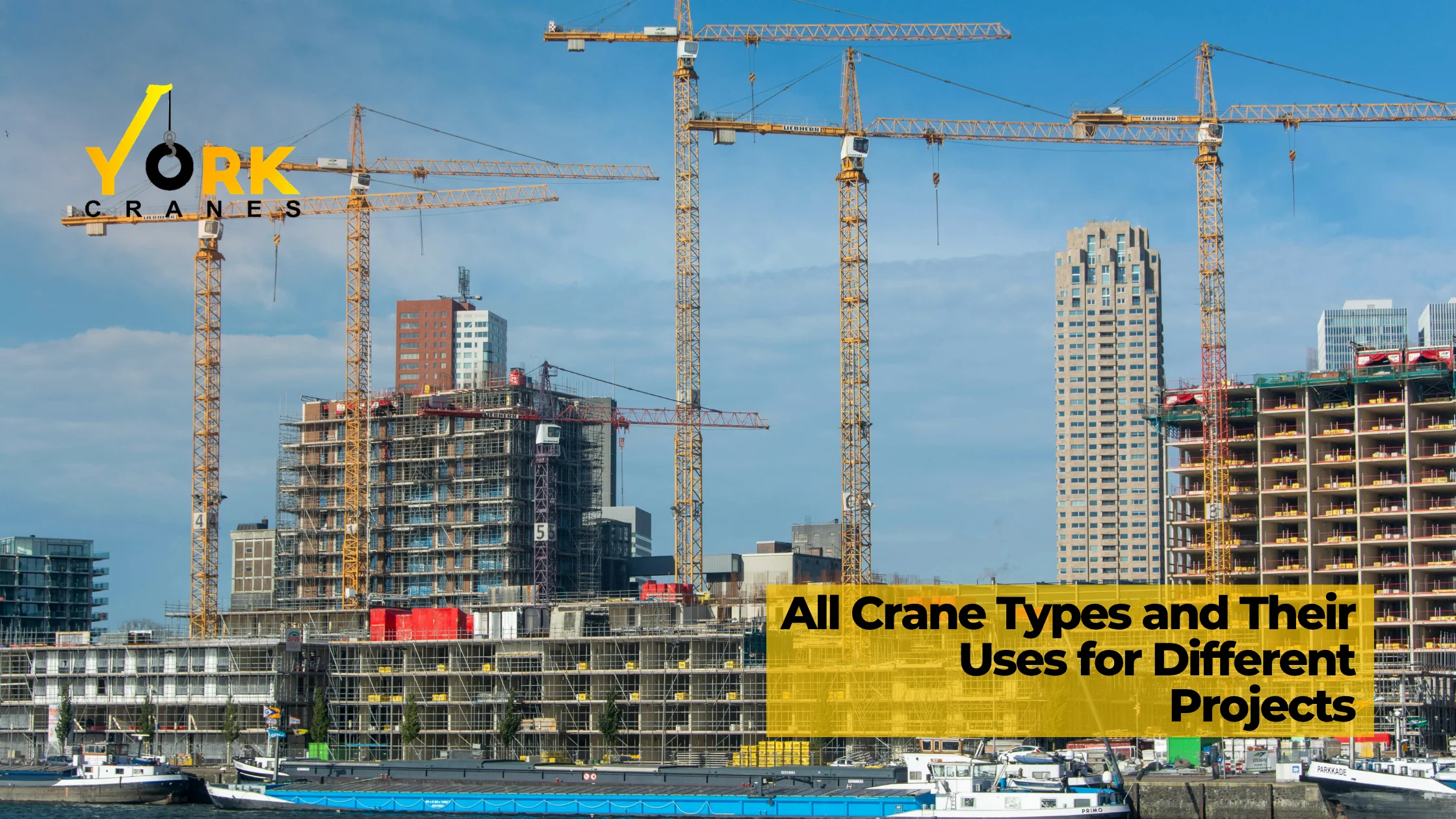
When it comes to choosing a crane, the main thing to think about is what kind of work it’s going to be doing. And to do that, you need to think about the load, how high you can lift it, how far you can reach, the ground conditions, how much space you’ve got available and how the crane is going to get to where it needs to be. Once you’ve got all that sorted out, it makes it a lot easier to pick the right crane.
Here are 20 of the most common types of crane you’re likely to come across on construction sites, in industrial lifting, infrastructure work and other kinds of projects in India.
Crawler Crane
Crawler cranes are pretty handy because they move around on tracks rather than wheels. The tracks give the crane a wide base, which makes it really stable and helps it get around on suitable ground.
The bigger crawler cranes are the ones you see on major lifting jobs where the load is really heavy or the work is going to be going on for a long, long time.
Uses of Crawler Crane
Crawler cranes are used for all sorts of heavy-duty lifting, like building bridges, power projects, infrastructure work, big buildings and heavy industrial lifting.
They’re also useful for putting up really big steel structures and installing major equipment where you really need to lift a lot. If you are torn between the two, our crawler crane vs mobile crane comparison breaks down which one suits your job better.
Mobile Crane
Mobile cranes, on the other hand, are designed to move from one spot to another. Most of them use wheels, which lets them get to different parts of a project without having to stay in one place.
They come in all sorts of sizes, from smaller ones that are perfect for normal site work to really big ones for heavy lifting.
Uses of Mobile Crane
Mobile cranes are a godsend on building sites, roads, bridges, steel erections and machinery lifting. They’re also really useful when a project has several lifting points and you need to be able to get to them all.
The biggest benefit of mobile cranes is that they can follow the work as it moves. This makes them really handy on big and changing job sites. You can check our mobile crane rental cost guide for a better idea of pricing.
Tower Crane
Tower cranes stand tall above a construction site, their long reach letting them swing a heavy load across a pretty wide area.
As a building grows up, up and up, the crane can just keep on lifting loads to the higher floors.
Uses of Tower Crane
You’ll mainly see tower cranes on high-rise buildings, apartment blocks, office blocks and big construction projects.
They’re perfect for lifting heavy stuff like steel, concrete bits, big blocks, formwork and all the other materials they’ll need on each floor.
Hydraulic Crane
Hydraulic cranes use hydraulic power to lift and lower loads and the system gives a very smooth and controlled movement.
They come in all sorts of sizes and configurations so can handle all sorts of lifting jobs. Some are good for general site work, while the bigger ones handle really heavy loads.
Uses of Hydraulic Crane
You’ll see hydraulic cranes being used for equipment installation, construction lifting, machinery moving, industrial work and moving materials around.
They’re a good choice when a load needs a steady, controlled lift from the ground up to its final position.
Farana Crane
In India, another name for a pick-and-carry lifting machine is the Farana crane. You’ll see these machines on loads of construction and industrial sites.
They’re useful for all those jobs on the construction site where you don’t need to set up a big fixed crane.
Uses of Farana Crane
Farana cranes are good for lifting steel, moving pipes, shifting equipment and moving construction materials around.
They come in handy when the work area is changing all the time and the crane needs to move with the job.
Pick and Carry Crane
A pick and carry crane can lift something and then move it to another spot within its working area. Unlike a crane that stays put, a pick and carry crane can actually carry a load to a different point.
This can save a bit of time when you need to move stuff after you’ve lifted it.
Uses of Pick and Carry Crane
You see these cranes used for steelwork, construction, factory jobs and moving equipment around. They’re also useful for placing materials at different points around the site.
For smaller lift jobs, a pick and carry crane can actually reduce the need for having a separate machine to lift and move the load.
Truck Mounted Crane
A truck mounted crane is a truck with a lifting system on it. This means the crane can travel on the roads and get to different project sites.
It’s a useful option when you’ve got jobs that are spread all over different locations.
Uses of Truck Mounted Crane
Truck mounted cranes are used for road construction, building work, utility jobs, lifting equipment and loading materials.
They’re also useful for service and maintenance jobs as the crane can travel to the job and do the lift right there.
Hydra Crane
In India, we also call pick-and-carry cranes Hydra cranes. They can pick something up and then move it around the site with it.
This makes them perfect for lifting work where you need to shift heavy stuff from one place to another.
Uses of Hydra Crane
Hydra cranes are commonly used for lifting steel, pipes, construction materials and moving equipment around. They’re also seen on industrial sites doing short-distance material shifting.
They’re a good fit for jobs where lifting and moving is a big part of the job.
All Terrain Crane
All terrain cranes. They’re built to tackle the road, as well as the lift at the job site. They’re the perfect blend of road travel and heavy lifting, making them ideal for the really big projects.
That means they can travel between different locations, which is a big plus for large projects that involve multiple sites.
Uses of All Terrain Crane
You’ll see them on bridges, power plants, and other large construction jobs, as well as on industrial sites and big equipment installations.
They’re a great option when your project needs a crane that can handle both long-distance road travel and heavy lifting.
Rough Terrain Crane
Rough terrain cranes, on the other hand, are made for work in areas where the road isn’t a smooth one. They’re designed to navigate uneven ground, so they can move around construction sites, industrial areas, and other places where the ground is a bit rough.
They’re not as suited to long road journeys, though. They’re meant to be used on-site rather than on the highway.
Uses of Rough Terrain Crane
These cranes are the go-to choice for construction sites, industrial plants, building projects, and other places where a smooth road isn’t an option.
They can handle a wide range of tasks, from lifting steel and pipes to moving building materials and equipment.
Telescopic Crane
A telescopic crane has a boom that’s made up of sections that slide in and out. That means the length of the boom can be adjusted, giving the operator the flexibility to deal with a job that’s not always a standard distance away.
This is really useful if you’re working on a job where the lifting point changes all the time and you need to be able to reach for it.
Uses of Telescopic Crane
Telescopic cranes are a good fit for construction, maintenance, equipment lifting, industrial work, and infrastructure projects.
They’re especially useful when you need to reach different distances at the same time.
Heavy Lift Crane
Heavy lift cranes are used for the big jobs – the ones that are too heavy for standard lifting equipment. They’re usually used on the really big projects with giant machines, structures, or plant equipment.
The setup for the crane is planned around the load – its size and weight, that is.
Uses of Heavy Lift Crane
Heavy lift cranes are used on power plants, refineries, industrial plants, bridges, large infrastructure projects and machinery installation.
They’re often brought in to do the big lifts – like placing large equipment or structural sections into place. For bigger loads, our 150 ton crane rental service is worth a look.
Mini Crane
Mini cranes are compact lifting machines designed for use in areas where space is at a premium. They can get into tight spaces, which makes them perfect for smaller work areas.
Some mini cranes can even be used indoors, depending on the floor and access conditions.
Uses of Mini Crane
Mini cranes are useful for jobs like glass installation, indoor construction, renovation, maintenance, and small lifting jobs.
They’re often the only option in areas where a larger crane just won’t fit.
Gantry Crane
A gantry crane has a bridge on legs that moves along a set path. It lifts loads within a defined area, and can be used either indoors or outdoors.
Uses of Gantry Crane
Gantry cranes are pretty common in factories, workshops, storage yards, warehouses, and heavy material handling areas.
They’re useful when the same work area needs regular lifting of steel, machinery, containers or other heavy materials.
EOT Crane
EOT stands for Electric Overhead Travelling crane. It moves along a runway inside a building, and can transport loads across the work floor.
The best thing about an EOT is that it leaves a lot of room for workers, vehicles and other equipment below.
Uses of EOT Crane
EOT cranes are used a lot in factories, manufacturing units, workshops, warehouses and industrial plants.
They are really good at moving around raw materials, machine parts, finished goods and big equipment from one work area to another.
Industrial Crane
An industrial crane is just a broad term to describe cranes used in factories, plant yards, workshops and all sorts of industrial places.
The actual crane you need can be totally different from one place to another. It’s all about the type of material you’re moving and how you do your job.
Uses of Industrial Crane
Industrial cranes can help with moving equipment around, production work, keeping plant maintenance running, installing new kit and handling materials.
They’re often used when it’s part of your daily routine to be lifting things, rather than just a one-off job. Take a look at our crane rental for industry guide to see how this works in practice.
Overhead Crane
An overhead crane has a track running along the ceiling inside a building. This means it can move a load across the work area without having to trundle all over the floor.
This setup is super handy when a factory or workshop needs to be lifting heavy things regularly in the same space.
Uses of Overhead Crane
Overhead cranes are everywhere in workshops, factories, warehouses, production lines and machinery units doing material handling.
They make it a lot easier to move big parts between work stations and keep material movement simple inside the building.
Jib Crane
A jib crane has a bit of an arm on the end which turns or moves around a fixed point and limits the lifting area to a smaller space.
Because it is so simple, it’s often used for smaller lifting jobs close to where the work is being done.
Uses of Jib Crane
Jib cranes are super useful in workshops, factories, assembly areas, loading points and maintenance sections where workers need a bit of regular lifting help.
They are brilliant for lifting tools, machine parts and other materials where workers need to do some regular lifting in a small area.
Loader Crane
A loader crane is attached to a truck or a carrier and its main use is for loading and unloading materials.
It’s basically a vehicle that combines transport and lifting, which can make delivering materials a lot easier on some projects.
Uses of Loader Crane
Loader cranes are used for all sorts of things like pipes, steel, timber, construction materials, machinery parts and utility equipment.
They are really good when you need to deliver and lift materials at the same time in the same place.
Knuckle Boom Crane
A knuckle boom crane has an arm that can bend and fold, which gives the driver a lot more control when placing loads in tight spots or around obstacles.
When folded, the crane also takes up less space during transport, which is a bonus.
Uses of Knuckle Boom Crane
Knuckle boom cranes are used for construction materials, utility work, transport, maintenance and marine lifting.
They are especially useful when the load needs to be placed somewhere tight rather than just lifted straight up and down.
Other Specialised Crane Types
Along with these common crane types, some projects may need a bit more specialised lifting kit. These include:
- Hydraulic Mobile Crane
- Hydraulic Truck Crane
- Telescopic Crawler Crane
- Truck Crane
- Self-Erecting Tower Crane
- Luffing Jib Tower Crane
- Hammerhead Tower Crane
- Flat Top Tower Crane
- Semi-Gantry Crane
- HOT Crane
- Portal Crane
- Boom Truck Crane
- Articulating Crane
- Marine Crane
- Floating Crane
- Harbour Crane
- Port Crane
- Ship Crane
- Deck Crane
- Derrick Crane
- Ring Crane
- Lattice Boom Crane
- Telescopic Boom Crane
- Super Heavy Lift Crane
- Construction Crane
- Railway Crane
- Rail-Mounted Crane
- Demolition Crane
- Spider Crane
- Mini Crawler Crane
- Electric Crawler Crane
Give York Cranes a call on +91 9866170600 to get more details about these and other crane types for your project. You can also browse our full range of crane rental equipment to see what else is available.
How to Choose the Right Crane Type
The right crane for you really does depend on your load, the site you’re working on and what kind of job you are doing. Before you go ahead and book a crane, check these basic points first:
- Load weight: Work out how heavy the load is. The crane has to have enough go in it to lift it.
- Lifting height: Check how high the load needs to go – this will help you choose the right boom and reach.
- Working radius: See how far the crane needs to reach – more distance reduces the lifting capacity, so be aware of that.
- Ground condition: Before you bring the crane onto the site, first make sure the ground is solid enough, flat and suitable.
- Site access: You’ll also want to check the site will be safe for the crane to set up and move around.
- Space: Make sure you’ve got enough space on the site for the crane itself, as well as its outriggers, tracks and for the load to be moved around.
- Type of work: Different types of jobs from construction to bridge work, road work or industrial lifting will need different types of cranes.
- Crane movement: If the job’s going to involve moving the crane around while it’s working, then a mobile or pick and carry crane might be what you need.
- Rental time: First, work out how long you’ll need the crane, so you can plan transport and availability. It also helps to check our crane rental cost in India guide before you lock in the dates.
- Ask the rental team: Share all the details you can on the load, how tall it needs lifting, reach required, the site layout and project timelines with them. That way they can recommend the right crane for the job. Our step-by-step crane hiring guide walks you through the whole process.
Find the Right Crane for Your Project
Every lift has its own particular requirements and the crane that gets used depends on load size, how high it needs lifting, site conditions, available space and the type of work. You’ve got options ranging from mobile and hydraulic cranes to crawler and tower cranes – each has its own uses in our Indian construction market.
Getting the right crane makes the whole lifting process a whole lot easier and less complicated – if you’re still unsure which one to go for, York Cranes can help by choosing the best crane for your site and lifting needs. Our roundup of the top crane rental companies in India is a good place to start comparing options.
Need a crane rental in India? Pick up the phone and give York Cranes a call on +91 9866170600 to run over your plans and find a crane that will do the job.
-
What are the different types of cranes used in India?
There are many types of cranes used in India for construction, industrial, infrastructure and heavy lifting work. Some common types include mobile cranes, hydraulic cranes, hydra cranes, pick and carry cranes, truck mounted cranes, crawler cranes, tower cranes, telescopic cranes, gantry cranes, EOT cranes, overhead cranes and jib cranes. Each crane type has a different use, so the right choice depends on the job and site.
-
Which type of crane is best for construction work?
There is no single crane type for every construction job. Mobile cranes, tower cranes, crawler cranes, hydraulic cranes and pick and carry cranes are commonly used in construction. Tower cranes are often used for tall buildings, while mobile cranes can be moved around the site. The right crane depends on the load, lifting height, site space, ground condition and type of construction work.
-
Which crane is used for heavy lifting?
Heavy lifting jobs usually need cranes with a suitable lifting capacity for the load. Crawler cranes, all terrain cranes, heavy lift cranes and high-capacity mobile cranes can be used for this type of work. The crane also needs to have enough reach and height for the job. Before choosing a crane, check the load weight, working radius, lifting height and ground condition at the site.
-
What is the difference between a mobile crane and a crawler crane?
A mobile crane runs on wheels, so it can move from one location to another more easily. A crawler crane runs on tracks and is often used for large construction and heavy lifting jobs. Mobile cranes are useful when lifting points change around a site. Crawler cranes are often chosen for jobs that need stable lifting over a longer period. The site and lifting plan help decide which crane is suitable.
-
What is a Hydra crane used for?
A Hydra crane is commonly used in India for lifting and carrying materials around construction and industrial sites. It can pick up a load and move it to another point on the site, which makes it useful for regular material handling work. Hydra cranes are often used for steel, machinery, pipes and construction materials. The required crane capacity depends on the load and site conditions.
-
How do I choose the right crane type for my project?
Start with the basic details of your lifting job. Check how heavy the load is, how high it needs to go and how far the crane needs to reach. You should also check the ground, site entrance, working space and space needed for crane setup. These details help you choose the right crane type. A crane rental company can also help you select suitable lifting equipment for your project.
-
Can I rent different types of cranes in India?
Yes, different crane types are available for rental across India. Depending on the project, you can rent mobile cranes, crawler cranes, tower cranes, hydraulic cranes, pick and carry cranes, truck mounted cranes and other lifting equipment. Crane rental is useful when you need lifting machinery for a specific project without buying a crane. York Cranes offers crane rental services across India for different lifting and construction needs.